
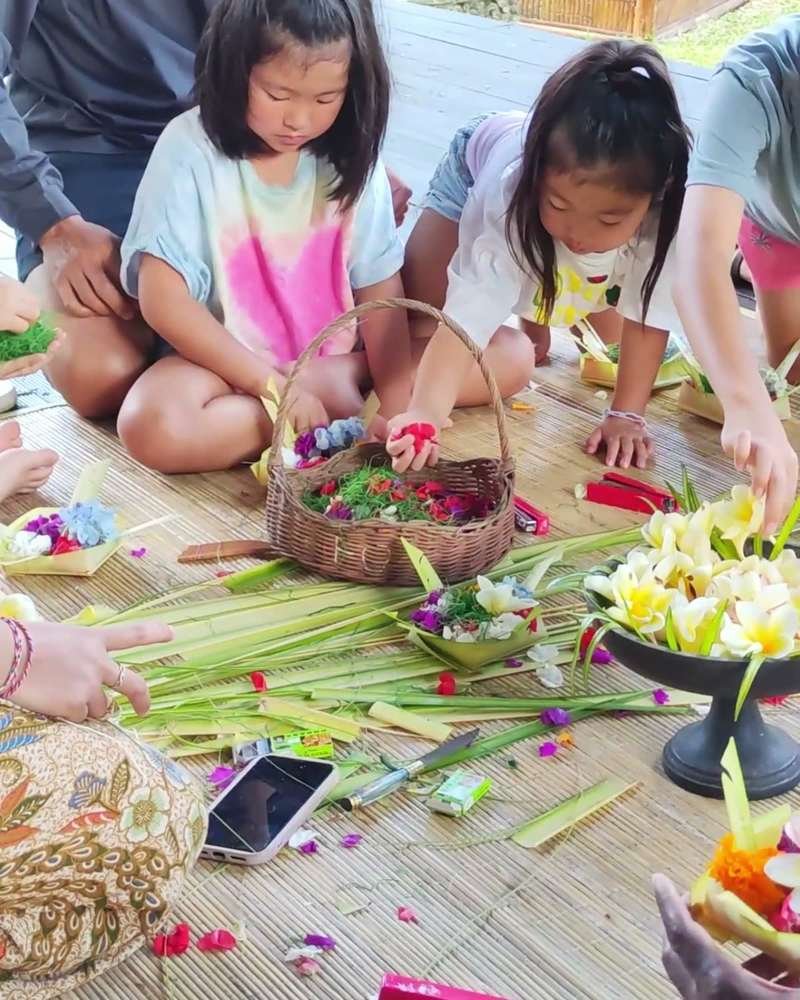
What the little palm-leaf trays on Bali’s doorsteps mean, what goes inside them, and how to make one.
Walk anywhere in Bali in the morning and you will see them: small trays of woven palm leaf, filled with flowers and placed on doorsteps, shrines, shop counters and even car dashboards, often with a stick of incense. They are canang sari, the everyday offering of Balinese Hindu life.
What the name means
The canang is the little tray itself, folded and pinned from young coconut palm leaf. Sari is usually translated as essence. Together they describe an offering made with care, placed each day as an act of thanks rather than a request.
What goes inside
At the base sits a small bundle called a porosan, traditionally made with betel leaf, lime and areca nut. On top, flowers are arranged in sections, and in the classic arrangement their colours point to the four directions and the Hindu deities associated with them:
- White to the east, for Iswara
- Red to the south, for Brahma
- Yellow to the west, for Mahadewa
- Blue or green to the north, for Wisnu
Families often add a little rice, a sweet or a coin, and finish with incense and a sprinkle of holy water.
A few courtesies for visitors
- Offerings on the ground are part of daily life. Step around them when you can.
- Ask before photographing someone as they make or place an offering.
- When you visit a temple, wear a sarong and sash; most temples lend them at the entrance.
Make your own at Ubud Raya
Guests at Ubud Raya Resort take a complimentary Canang Sari class in our open teak pavilion. A Balinese teacher shows you how to cut and fold the palm leaf, build the tray and arrange the flowers, and explains the meaning of every step.


